Meer aandacht voor de patiënt dankzij AI
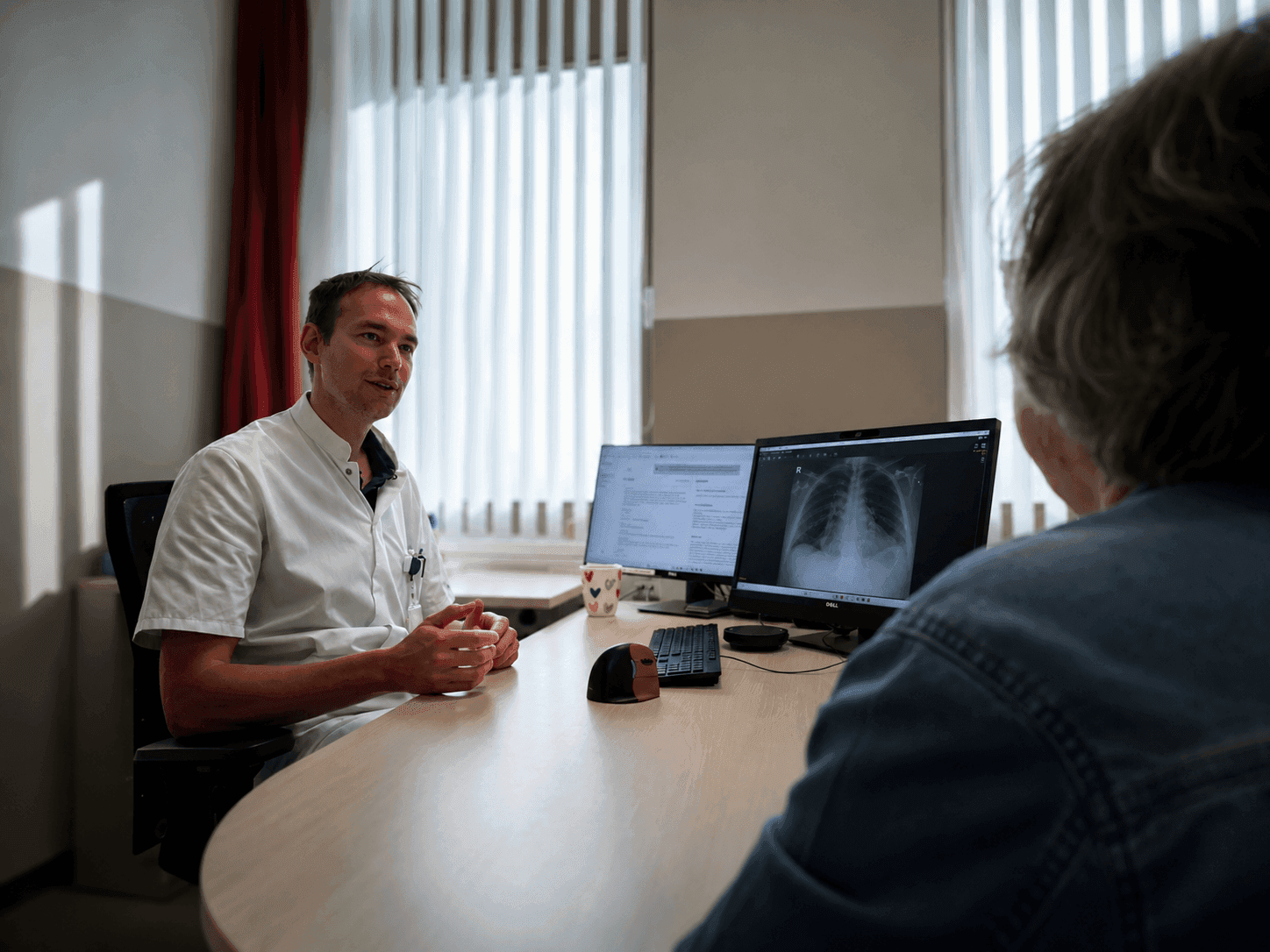
“During a consultation, I look at the patient again, instead of at my screen.” For St Jansdal cardiologist Bob van Bartheld, that is the biggest difference since he started working with Notes from OurMind: a digital assistant that listens in during consultations and automatically creates a structured report. What started as a solution to administrative pressure also turned out in practice to lead to more attention and job satisfaction.
The challenge St Jansdal was facing will be recognizable to any hospital. Doctors spend more and more time on documentation, often during the consultation itself. That means listening, typing, and structuring at the same time – in a ten to twenty-minute conversation where everything has to happen.
Pure gain
“You have a huge amount to do in a short time,” says cardiologist Bob van Bartheld. “Understanding the complaint, discussing medication, making decisions, and recording all of this. Anything you can outsource from that is pure gain.”
Notes listens in during the consultation and converts the conversation into a draft report. That report can then be fully adapted to the doctor's preferences in terms of structure, style, and formatting. Templates can also be used, created, and shared within teams.
The doctor always remains in control: checking, adjusting, and approving remain part of the process. The result is therefore not an automatic replacement of work, but a shift in the distribution of it.
From multitasking to attention
For Bob, the biggest change occurs during the consultation itself. “I no longer type during the conversation. That sounds small, but it changes everything. You are truly engaged with your patient. Moreover, it reduces the mental load; listening and documenting at the same time takes a lot of energy. If that is eliminated, it brings peace of mind.”
Dave van de Velde, pediatrician and CMIO at St Jansdal, recognizes that: “As you gain trust in the tool, you start listening more and recording less during a conversation. In addition, my days are starting to fit again. Where consultation hours used to run late because the administration had to be done immediately, there is now room to do that later. Everything is automatically recorded; adjusting and fine-tuning can easily be done later. It makes me more flexible, and that is worth a lot.”
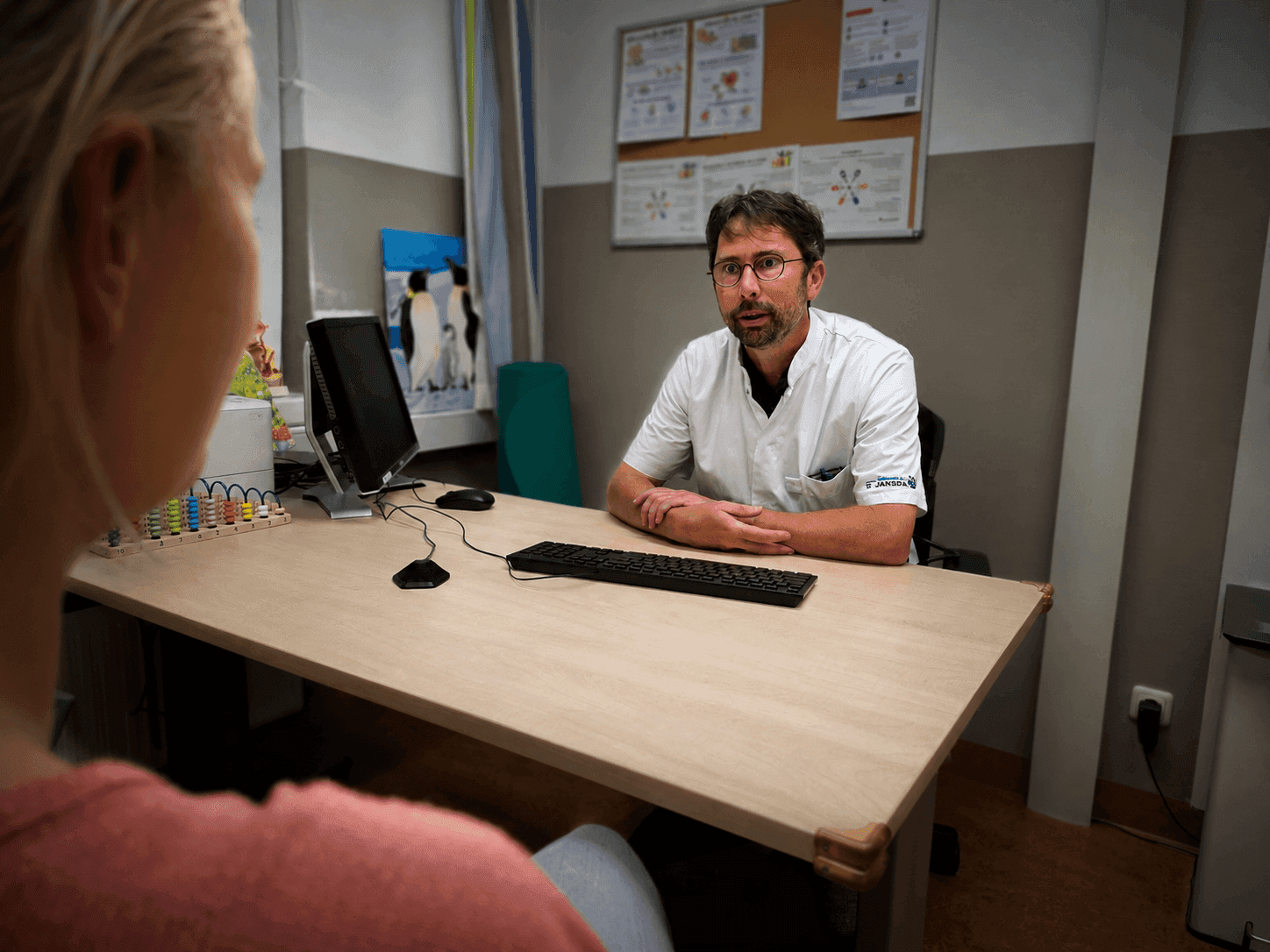
Patients appreciate the increased attention. Dave: “I often hear: ‘How nice that you are not on the computer the whole time’. Moreover, the structured reporting ensures that patients can better read back what was agreed upon, and especially why. As a result, they know better what to expect. This, of course, without their privacy being compromised in any way.”
Getting used to a different way of working
The biggest challenge turned out to be not the technology, but the adoption. Many doctors have to get used to a different way of working, to letting go of their fixed structure. And to the fact that a report does not automatically fit their own style perfectly. “If it doesn't feel like your report, you disengage,” Dave says.
That makes guidance crucial for a good implementation. "OurMind provides personal onboarding, lunch & learn sessions, instructing (super)users, and personalizing the reports. With this party, we did not choose a supplier, but a partner.”
That combination – good guidance and ensuring customization – proved essential to get it widely accepted within the hospital. Meanwhile, about half of the 240 medical specialists within St Jansdal use Notes.
The honest story: it isn't perfect
“We didn't start this at St Jansdal to be able to see more patients,” says Dave. “The time savings per consultation is still limited for now. Reports still need to be checked and adjusted; the technology is not yet perfect.”
Moreover, complex situations are sometimes summarized too generically. The tool does not always emphasize what is medically most relevant. And because doctors write less themselves, they also seem to remember the information less well. “I therefore sometimes have to read up a bit longer when a patient returns.”
Bob: “It is no magic bullet. You always have to check the report, sometimes adjust it significantly. If you haven't personalized the digital medical dictionary yet, medical terms are not always picked up correctly. But even with those corrections, I finish faster than when I do it all myself.”
What this means for healthcare
The use of AI in healthcare often raises the question: what does this mean for people? At St Jansdal, the answer is clear: this technology does not make people redundant, but helps to coordinate care better and utilize existing capacity more effectively. It creates a bit more breathing room, and with that, more job satisfaction.
The value is not in direct productivity, but in restoring human attention. And that is exactly what healthcare needs as far as we are concerned. “As a pediatrician, I no longer want to go without it,” says Dave. “If it doesn't work for once, I really have a terrible day.” Or, as Bob summarizes it: “OurMind does exactly that part of the administration for which I was not trained, but which filled a large part of my day.”